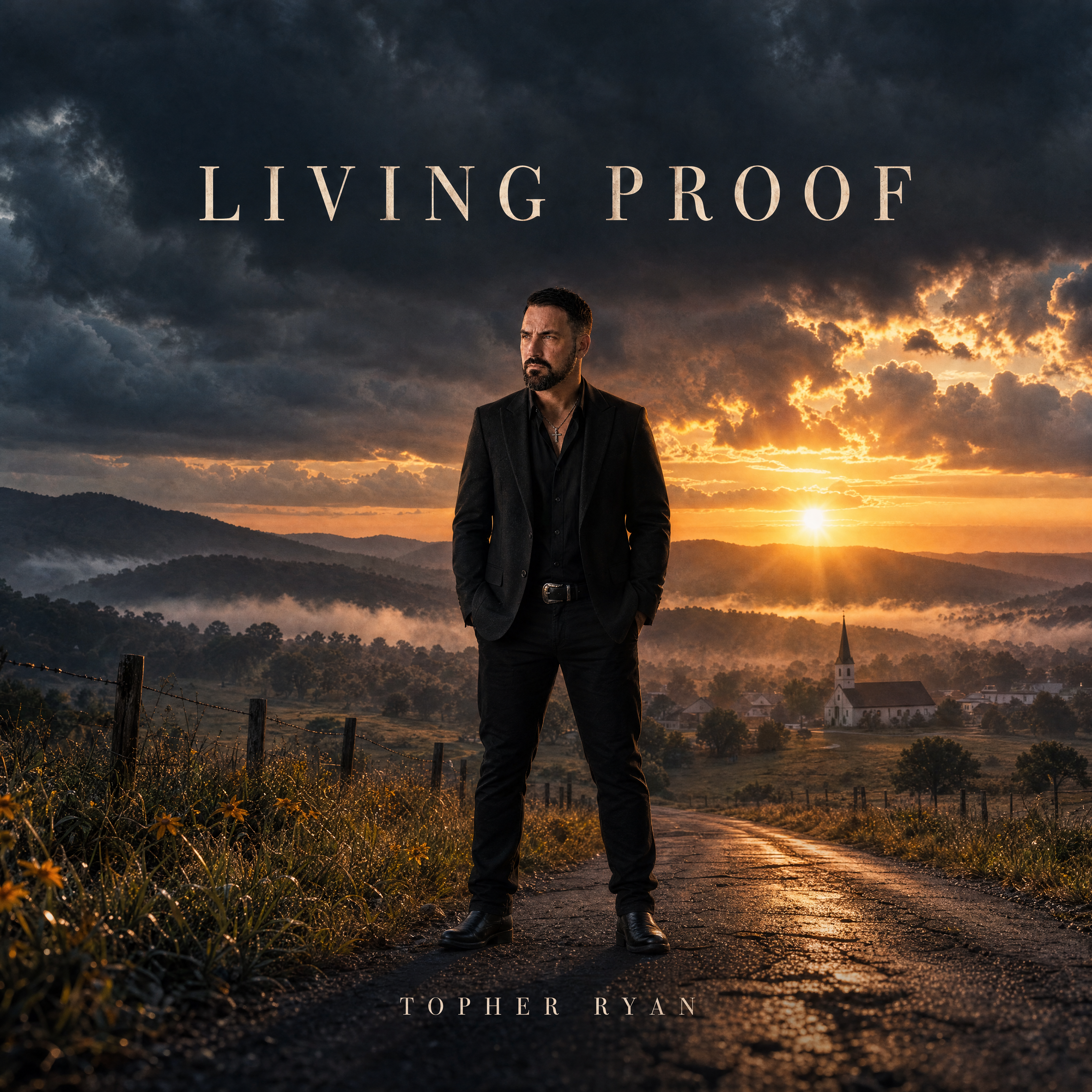
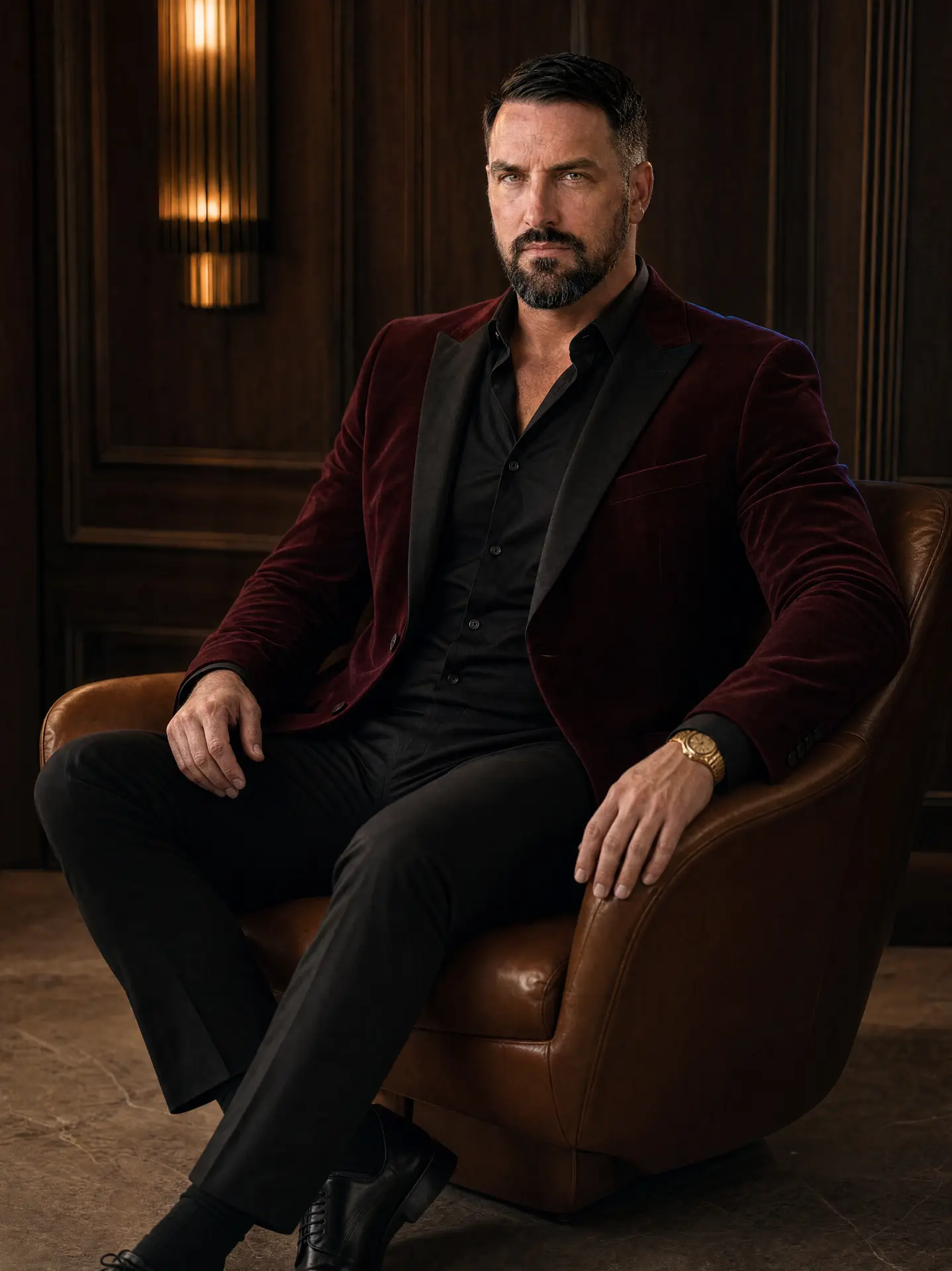
The internet has questions about whether I’m a real person. Here’s the honest answer.
Apparently, the internet has questions.
I’ve read the stories. I’ve seen the comments. I’ve watched people study my photos, videos, songs, and probably the shape of my eyebrows with the intensity of detectives reviewing evidence from a small-town crime scene.
“Is Topher Ryan a real person?”
“Is he AI?”
“Was he created in a computer?”
One person may already be preparing a twelve-part documentary titled The Topher Ryan Conspiracy. Episode one will examine whether I have the correct number of fingers. Episode two will slow down one of my videos frame by frame. Episode three will reveal the shocking truth: sometimes the lighting is just good.
So let me clear this up.
I am a real person.
I wake up tired. I lose things I was holding thirty seconds ago. I have walked into rooms and forgotten why I went there. I have stared into a refrigerator as if the answer to life might be hiding behind the mustard. I have felt love, loss, hope, fear, rejection, joy, and the very specific disappointment of hearing a great melody in my head and forgetting it before I could record it.
As far as I know, artificial intelligence has not yet mastered that particular collection of human achievements.
But I understand why people are asking.
Some of my videos have been created with the help of AI. We also use AI as a tool in the studio to explore sounds, textures, and production ideas that we might not normally be able to create. It can help us experiment, take an idea somewhere unexpected, or hear a song through a different set of speakers — figuratively speaking.
That doesn’t mean a machine is secretly living my life, writing my story, or sitting in a dark room somewhere pretending to be Topher Ryan.
Although, if it wants to answer emails and remember all my passwords, we should probably talk.
AI Is in the Room
The truth is that AI has entered the creative world, and it probably isn’t leaving.
Music, film, photography, design, animation, and nearly every other corner of entertainment are changing because of it. Things that once required enormous budgets or entire teams can sometimes be imagined and tested by a handful of people — or even one person — with the right tools.
That shift is exciting. It is also strange, complicated, and occasionally terrifying.
This is not the first time technology has changed art. Electric guitars were once new. Drum machines were controversial. Digital recording transformed the studio. Auto-Tune became both a corrective tool and a creative effect. Music videos changed how audiences experienced songs. Streaming changed how music reached listeners.
Every generation meets a new tool and asks the same question:
“Is this going to ruin everything?”
Sometimes the concern is justified. New technology can be misused. It can make things faster without making them better. It can encourage imitation instead of imagination. It can tempt people to value volume over meaning — to produce more content, more quickly, for more platforms, without stopping to ask whether any of it has a heartbeat.
But a tool is not the same thing as the person holding it.
A guitar does not decide which truth to tell. A camera does not choose what deserves to be remembered. A microphone cannot feel the weight behind a trembling voice. And AI, no matter how powerful it becomes, does not replace the lived experience that gives art its meaning.
The Human Part Matters
Art has always been about more than technical perfection.
The note that breaks a little can be the one that breaks your heart. The lyric that sounds simple may have taken someone twenty years of living to understand. A song becomes important not because every element is flawless, but because something human passes through it.
That human element must be protected.
We should care about consent. We should care about giving artists credit. We should care about ownership, identity, and the difference between being inspired by someone and simply taking what they created. We should ask difficult questions about how creative work is used, who benefits, and whose voice may be copied without permission.
Those conversations matter because artists matter.
Behind every meaningful song is a person who had to live long enough to write it. Someone fell in love. Someone lost a parent. Someone left home. Someone stayed too long. Someone made a mistake, asked for forgiveness, started over, or finally admitted the truth.
AI may recognize the patterns in those stories, but people carry the scars.
That difference is everything.
A Paintbrush in Our Hands
I don’t see AI as the artist. I see it as a paintbrush.
A paintbrush can create something beautiful, but it cannot decide why the painting needs to exist. It needs a hand. The hand needs a mind. And somewhere behind that mind, there needs to be a heart with something worth saying.
That is how I approach AI in my own work.
It can help us experiment with a visual idea for a video. It can help us search for a sound that exists somewhere beyond the limits of our usual studio setup. It can become part of the creative process — the same way a new instrument, effect, camera, or piece of software can open a door we hadn’t noticed before.
But it does not decide what I believe.
It does not choose which memories still hurt.
It does not know why a certain line matters to me or why I need to sing it a certain way.
The tool can help shape the frame. The life inside that frame still has to come from somewhere real.
And maybe that is the challenge facing entertainment right now. The technology will keep improving. Images will become harder to distinguish. Voices will become easier to reproduce. Entire worlds will be created faster than we once thought possible.
But “possible” and “meaningful” are not the same word.
The future of entertainment should not be a contest to see how completely we can remove people from the creative process. It should be an opportunity to give people more ways to express what is inside them.
The best use of technology is not to erase the artist. It is to extend the artist’s reach.
So, Is Topher Ryan AI?
No.
Topher Ryan is a real person who happens to live in a time when the definition of a creative tool is expanding rapidly.
I write from human experiences. I make human mistakes. I chase ideas that sometimes work and sometimes fall apart spectacularly. I care about the stories inside the songs and the people who find pieces of their own lives in them.
Yes, AI has helped with some of the visuals you’ve seen.
Yes, we use it in the studio as one of many tools to find sounds and production possibilities we might not otherwise reach.
And yes, I believe it can become a meaningful part of the future of music and entertainment — if we use it thoughtfully, honestly, and without forgetting the people at the center of the art.
So keep asking questions. Keep paying attention. Keep defending the value of human creativity. The conversation is important, and we are only at the beginning of it.
But as for the rumors about me, I hate to disappoint the conspiracy theorists:
I am very real.
Unless, of course, that is exactly what an AI would say.
Quick answers
Is Topher Ryan AI?
No. Topher Ryan is real — a real person, country artist and songwriter who writes from his own life, not from a machine.
Is Topher Ryan a real person?
Yes. He wakes up tired, loses things he was holding thirty seconds ago, and forgets why he walked into a room. As he puts it, AI has not yet mastered that particular collection of human achievements.
Related stories