
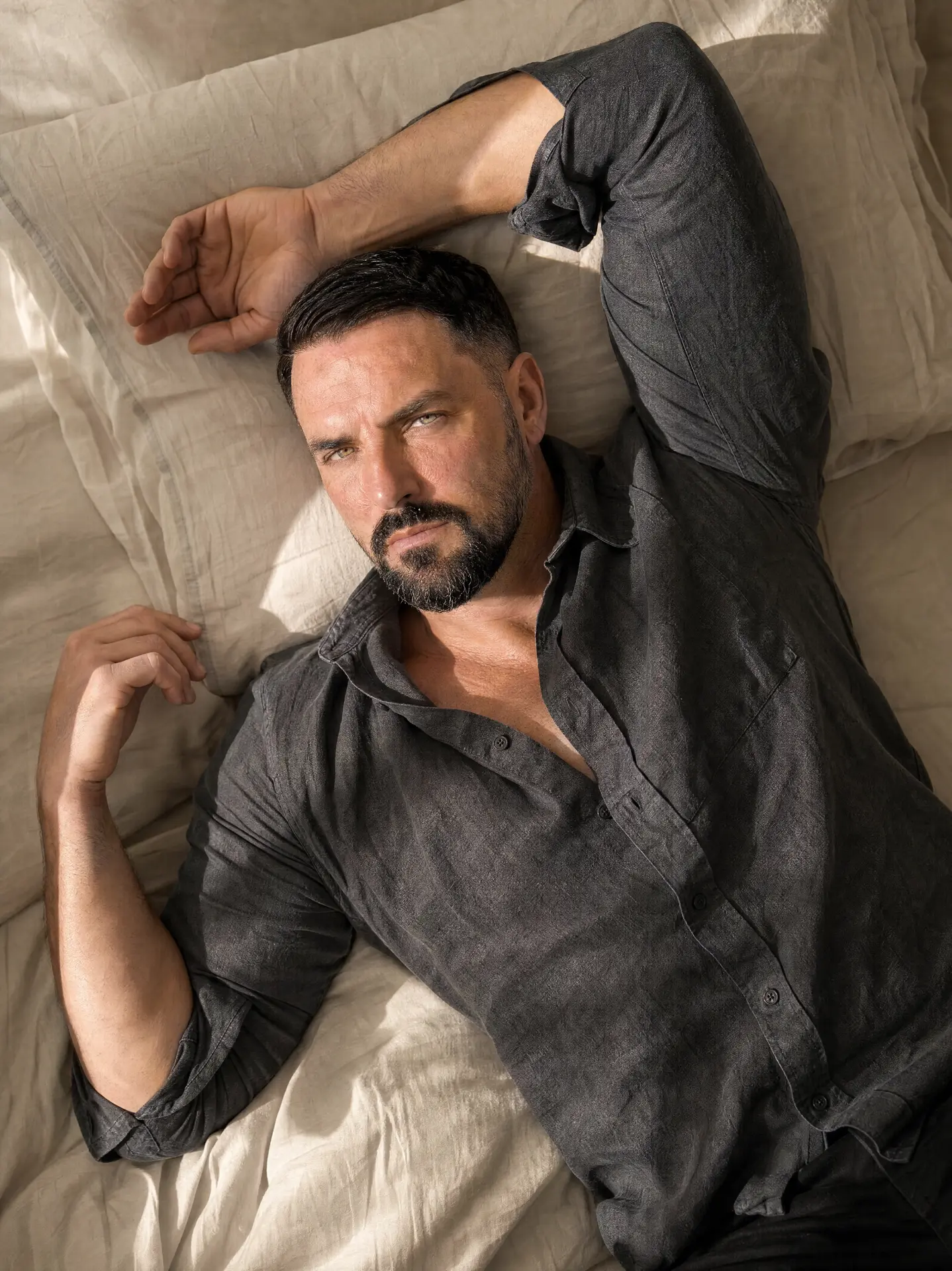
Why I turn my songs into films — and why I can’t seem to leave a love story alone.
I have always been a romantic.
Probably to an unreasonable degree.
I’m the kind of person who can hear a song and build an entire life inside it before the last chorus ends. Give me a piano, a voice that sounds like it has lost something, and the right words, and suddenly there’s a house somewhere. A woman standing in a doorway. A man sitting in a truck, trying to decide whether to go back.
I want to know what happened before the song started. I want to know what they said when they still thought they had forever. I want to know which one noticed the silence first.
That’s where my mind goes.
I have what I can only describe as an extremely unhealthy addiction to romance. I say that with a little humor, but there’s some truth underneath it. I can get so caught up in the possibility of a love story that I start furnishing rooms in a future nobody has agreed to live in.
One look becomes a beginning. One conversation gets a soundtrack. A small moment becomes something I turn over in my head until it has lighting, dialogue, and an ending that could wreck somebody.
Usually me.
And somewhere in all that ridiculous, hopeful, occasionally heartbreaking imagination, a song starts taking shape.
I’ve Always Loved Films
Forrest Gump is my favorite movie.
There’s something about watching a whole life unfold like that — the tenderness, the absurdity, the loss, the way love stays with somebody even while everything around them changes. It makes you laugh, then catches you somewhere you weren’t protecting.
I love that a story can do that. It can give you a person you’ve never met, put you beside them for a couple of hours, and leave you feeling like you’ve known them your whole life.
Nicholas Sparks is my favorite author, which probably tells you everything you need to know about how much emotional damage I am apparently willing to volunteer for.
And I love The Choice.
Of course I do.
Give me love, uncertainty, a little beauty, and the possibility that life might ask more of two people than they ever expected, and I’m going to sit there completely invested. I’ll know it’s a story. I’ll know someone wrote it. That knowledge will do absolutely nothing to protect me.
I love the anticipation before two people admit what everybody else can already see. The ordinary afternoon that becomes important only when they look back. The choices that seem small until they divide a life into before and after.
Those are the things I carry into my writing.
I Can Romanticize Almost Anything
A porch light.
A half-empty cup of coffee.
A woman letting her hair down beside a truck.
Someone waiting at a door long after they have every reason to leave.
My imagination has never needed much encouragement.
The dangerous part is that it doesn’t always stop where reality stops. I can fall in love with what a moment might mean. I can take something unfinished and spend far too long imagining the beautiful thing it could become.
Sometimes I think I’m attached to the possibility as much as the person. The conversation we might have. The place we might go. The version of us that exists if everything finally works out.
There’s a whole world in that word, if.
There’s also a place to hide.
I know there’s a difference between loving someone and loving the movie you’ve made about them in your head. A real person has their own choices, their own limits, their own life. They don’t owe you the ending you imagined just because you imagined it beautifully.
That’s a hard truth for a romantic.
It’s easier to write the scene where somebody comes back than to accept that sometimes they won’t. Easier to believe the perfect speech could fix everything than to admit there may be nothing left to say.
I’m drawn to those speeches. Those reunions. Those impossible second chances.
But I’m also interested in what happens when they don’t come.
Because that’s a story, too. And sometimes it’s the story somebody needs to hear.
Before I Finish the Lyrics, I Can See the Room
When I write a song, I tend to think of it as a story.
There are people inside it, even when I haven’t given them names. Somebody wants something. Somebody is afraid. Somebody remembers a version of their life they can’t get back to.
Often, I can see where they are.
I can see the light coming through a window. I can tell whether the room feels lived in or abandoned. I can imagine the way somebody holds their shoulders when they’re trying not to fall apart.
A line about leaving makes me think about a suitcase beside a bed. But then I start wondering about everything around it.
Has the suitcase been there all morning?
Did the other person notice it?
Is she moving carefully because she doesn’t want to wake him, or because she’s hoping he will wake up and say something?
That’s where a lyric opens up for me. A few words become a room full of things nobody is saying.
By the time the song is finished, part of the movie already exists in my head.
And I keep coming back to this thought:
Every good story has a movie.
Maybe it never reaches a screen. Maybe it only plays behind somebody’s eyes while they listen. But there’s a movie there. There are faces, places, little details. There’s a world beyond the words.
I want to let people see the one I see.
The Moments I Want to Film
I love a big emotional scene. I’m not going to pretend otherwise. I want the light, the movement, the music rising at exactly the right time. I want the moment that makes you sit a little closer to the screen.
But the scenes that stay with me are often smaller.
A person tries to smile at their reflection and can’t.
A hand reaches for a lock, then stops.
Someone checks the window because they’re certain the person outside must have given up by now.
And that person is still there.
You can explain that feeling in a lyric. You can also let an audience discover it on a face.
That’s what excites me about visual storytelling. The song can tell you what a person feels while the picture shows you what it costs them to act on it.
Opening a door takes a second.
Deciding you’re worth helping might take everything you have.
I want to give those moments enough room to matter.
Romance Has Found Its Way Into Everything I Make
Even when I write about something other than a relationship, that romantic part of me is usually somewhere nearby.
It shows up in the belief that a broken person still has a future.
It shows up in someone being patient when patience is difficult.
It shows up in the idea that there might be a life waiting for you that you cannot imagine from where you’re standing.
That’s part of what draws me to a story like Living Proof.
I can picture the man who has stopped expecting anything good. I can picture the room he’s in and how small his world has become. Then I can picture the person he might be, standing outside that room, waiting for him to open the door.
There’s something deeply moving to me about that encounter.
What would it feel like to meet the version of yourself who made it through?
Would you believe him?
Would you recognize him?
Would you even let him in?
Those questions give me images. The images give me scenes. The scenes help me understand what I’m trying to say in the song.
My imagination may be completely unreasonable about romance, but it also keeps asking what could still be possible for a person.
I don’t want to lose that part of myself.
I just want to get better at knowing when it belongs in a song and when I need to let real life speak for itself.
Beautiful Doesn’t Have to Mean Easy
The more I think about love stories, the more interested I become in what happens beyond the scenes everybody remembers.
After the kiss.
After somebody comes back.
After the promise.
There’s a whole life after that.
There are tired mornings and difficult conversations. There are things an apology doesn’t immediately repair. There are days when loving somebody requires more patience than poetry.
I still want the breathtaking moments. I still want the kind of look that makes the rest of a room disappear. I doubt I’ll ever become sensible enough to stop wanting those things.
But I want the stories I tell to have something underneath the beautiful pictures.
If someone leaves, I want you to understand why the empty chair hurts.
If someone stays, I want you to feel what it took for them to stay.
If someone gets better, I want you to remember the person on the floor — not because that moment defines them forever, but because you saw how far they had to travel.
An ending means more when you’ve lived through the middle.
Why I Keep Making the Movies
A song gives me a few minutes to make somebody feel something.
A film gives me another way to invite them in.
I can put you in the passenger seat. I can let you stand outside the door. I can hold on a face for the second after the lyric ends, when the feeling is still there and the person hasn’t figured out what to do with it.
I love that possibility.
I want someone to hear a song and think about their own life. Then I want them to watch the video and notice something they hadn’t heard the first time. A gesture. A hesitation. A little act of kindness that changes the meaning of the next line.
I know the movie I imagine won’t be the movie every listener sees. That’s part of the beauty of music. People bring their own faces into a song. Their own memories. Their own person they wish would have stayed.
I’m sharing my version, knowing you may carry a different one.
Maybe that’s why I’m so drawn to all of this. Writing, music, films, love stories — they give us somewhere to put feelings that otherwise have nowhere to go.
The love we couldn’t explain.
The apology we never made.
The future we imagined so clearly that losing it felt like losing a memory.
The hope we’re a little embarrassed to admit we still have.
I’ve always been a romantic. I’ve always loved films. I still get carried away. I still hear a song and start seeing a life unfold.
So when I write, I follow it.
I find the room. I find the people. I try to understand what they’re afraid to say.
And when the song is finished, I turn on the camera.
— Topher Ryan
Comments (0)
Be the first to share your thoughts.
Related stories
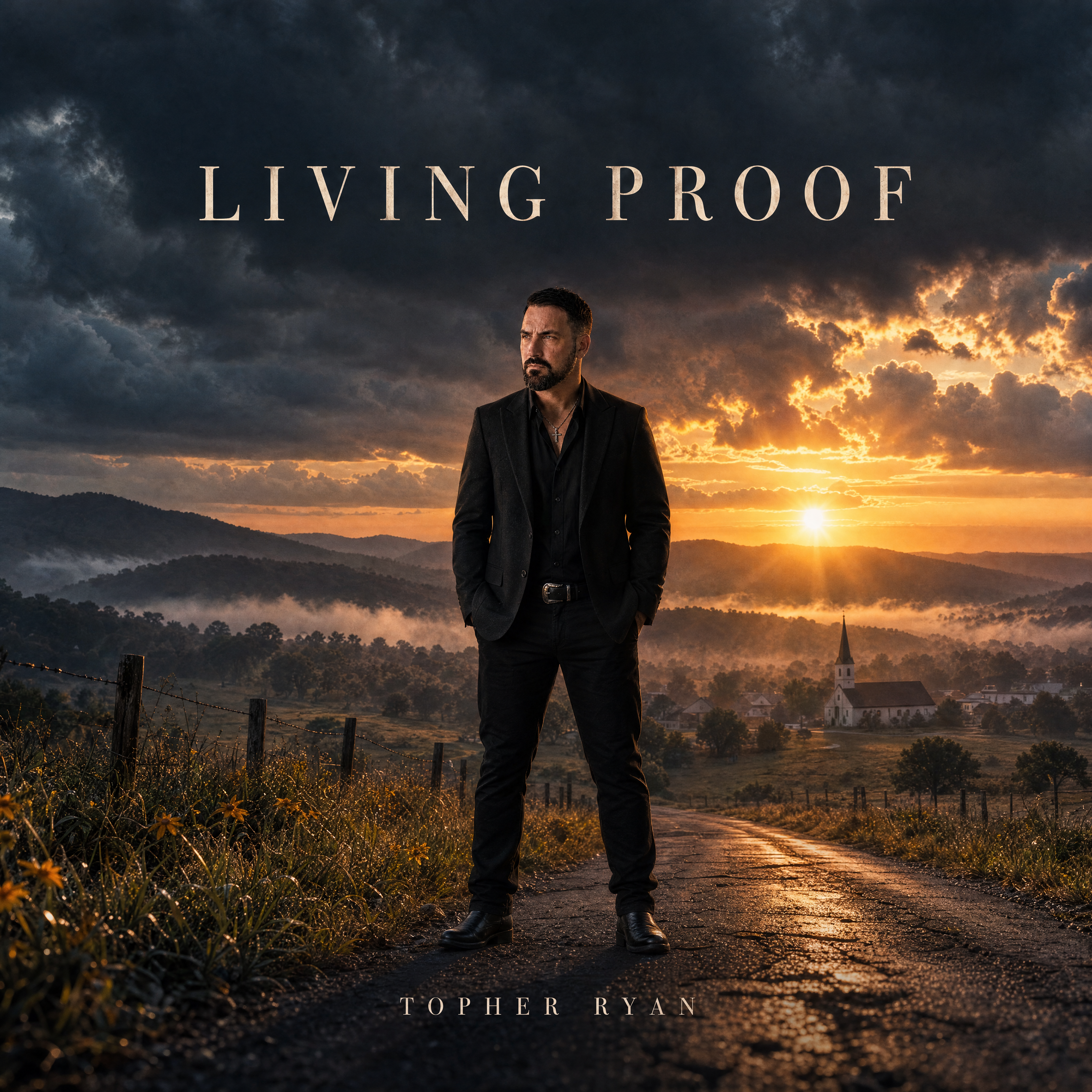
Behind the Songs · Sep 20, 2026
Living Proof: The Story Behind the Song
A song about surviving the things that were supposed to break you.

Behind the Songs · Oct 21, 2026
A Light in the Window: The Kind of Love I Still Believe In
A dollar and seventy-five cents, an unexpected conversation, and a Christmas spent alone became a song about hope — and the kind of love I still want to come home to.
Life · Oct 20, 2026
My Name Is Chris Jones
My name is Chris Jones, and I’m releasing music as Topher Ryan. Here’s the story behind the name, in my own words.