The saltines, the near-misses, and the years spent one break away. Looking back at the road that led me to a studio, a daughter, and a different kind of dream.
Where the Music Started
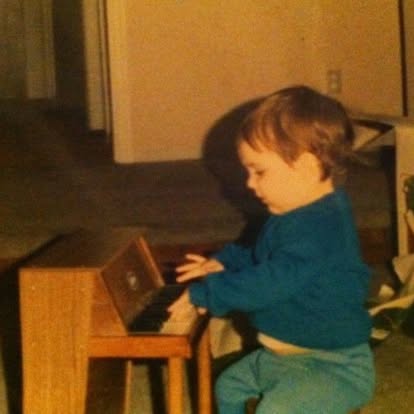
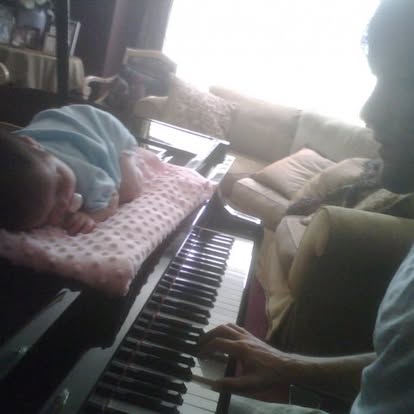
I started playing music as early as I can remember. At three years old I was already banging on a toy piano, making noise that felt like music to me even if it didn’t sound like much to anyone else. My grandmother had an organ in her house, and I would sit at it whenever I could, pressing the keys and pulling the stops just to hear what happened.
When I was ten, my mom bought a grand piano from Lancaster Music in Gainesville, Georgia. That piano became the center of a lot of my free time. I didn’t have formal lessons at first—I just played. I had a strange, early obsession with Michael Bolton and Kenny G, and I would try to figure out their songs by ear, over and over, until my hands started to understand what the records were doing.
In sixth grade I decided I needed to play saxophone. The school had a brand-new band director that year — Michael Pickett — and I went through every instrument they would let me try. My mom quietly hoped I would pick something less expensive, but I was locked in on the sax.
Michael stayed with me long past that classroom. Through every year since, his guidance and his friendship have carried me, and I wouldn’t be the man I am today without him.
Around the same time I still believed in Santa Claus and asked for a guitar and a drum set. She worked hard that year and surprised me with both at Christmas. I can still remember the weight of them, the way the room felt when I realized they were real. From that point on I was splitting time between the piano, the saxophone, the guitar, and the drums, chasing whatever sound felt right in the moment.
Rock and smooth jazz were the two poles I lived between. I learned every Kenny G song I could find on the saxophone and played them until the muscle memory was automatic. At the same time I was deep into Metallica. The combination was odd, and I knew it, but both of them made sense to me. One taught me melody and control; the other taught me volume and aggression. I never really chose between them.
Getting in the Van
After high school I went to college to play golf for a year. It was a clean path, or at least it looked like one from the outside. Then I got the chance to play keys and guitar in a local band called Last November. They were starting to get real traction, and the pull was stronger than the scholarship. I quit school and got in the van.
We ate a lot of saltine crackers. There were nights when that was the meal, and mornings when we woke up still tasting them. I told myself it was temporary, that the next show or the next contact would change the math. A lot of musicians tell themselves that. Sometimes it’s true. Most of the time it’s just how you stay on the road.
That stretch with Last November led to the next one. A guy who wanted to put a band together heard I was out touring. I played him a song I had written, and before I had fully processed what was happening he had four other guys from around Cleveland, Georgia lined up and ready. We claimed Atlanta as our home base, but most of the real work happened closer to Cleveland.
I had never been a singer. The band needed one, so I became one. I leaned hard on Auto-Tune because I didn’t know how to do it any other way. Listening back to those recordings now is uncomfortable. The pitch correction is obvious, the performances are uneven, and the whole thing has the sound of someone figuring it out in public.
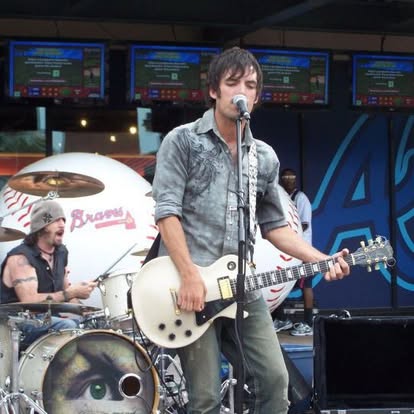
We won a contest through MTV and got the chance to open for Linkin Park. That show mattered. It opened other doors and gave us stories we could tell. I also produced and recorded our album, even though I was learning as I went. You can hear the inexperience in the tracks—the choices that felt right in the moment and don’t hold up the same way now.
And we didn’t do it alone. I think often about how blessed we were to have the friends we had along the way — Jeff Newton, Amy Jennings, David the Songdragon, Nina, Kiesha, John and Sherri Callaham, and the list goes on and on. They were the ones who believed in the band before there was any reason to, who made the hard stretches feel like something worth walking through, and who kept us grounded when the dream was easy to mistake for the whole world. Those years were lean, but they were never lonely. That’s a gift I still don’t fully know how to return.


Close Enough to See the Dream
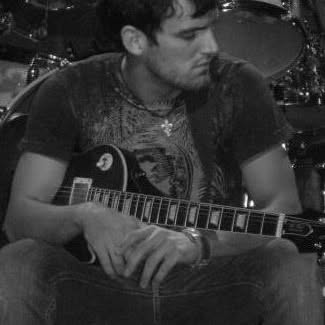
Over those years we crossed paths with a lot of people who had already made it further than we had. We worked with different producers and ended up in rooms with acts like 3 Doors Down, Chris Cornell, and Dave Grohl. Those moments were surreal in the way only the music world can be: you’re standing close enough to see how the bigger version of the job actually works, and then you go back to the van.
The biggest of those moments was dinner with Sir Elton John. I still think about that night more than most of the shows. It was quiet proof that the distance between where we were and where we wanted to be was real, but also that the distance could be crossed by someone.
One of the most important things that happened during that time had nothing to do with the set list. While we were opening for Pink and Train at Atlantic Station, I met the woman who would become my daughter’s mother. That relationship has been the hardest thing I have ever had to navigate. It has also been the biggest blessing of my life. Everything else from those years—the almost-deals, the late nights, the Auto-Tune—sits in a different category than that.
A Different Room
We spent years on the road feeling like we were always one break away. Then the setbacks started stacking up. Poor management made the gaps wider instead of smaller. Eventually the band fell apart. There wasn’t a single dramatic ending, just the slow realization that the version of the dream we had been chasing wasn’t going to arrive in the form we expected.
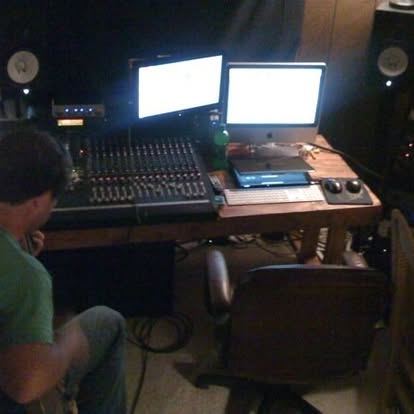
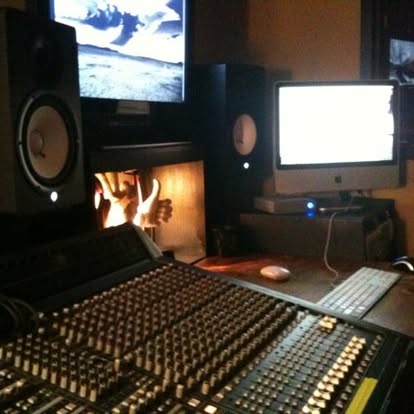
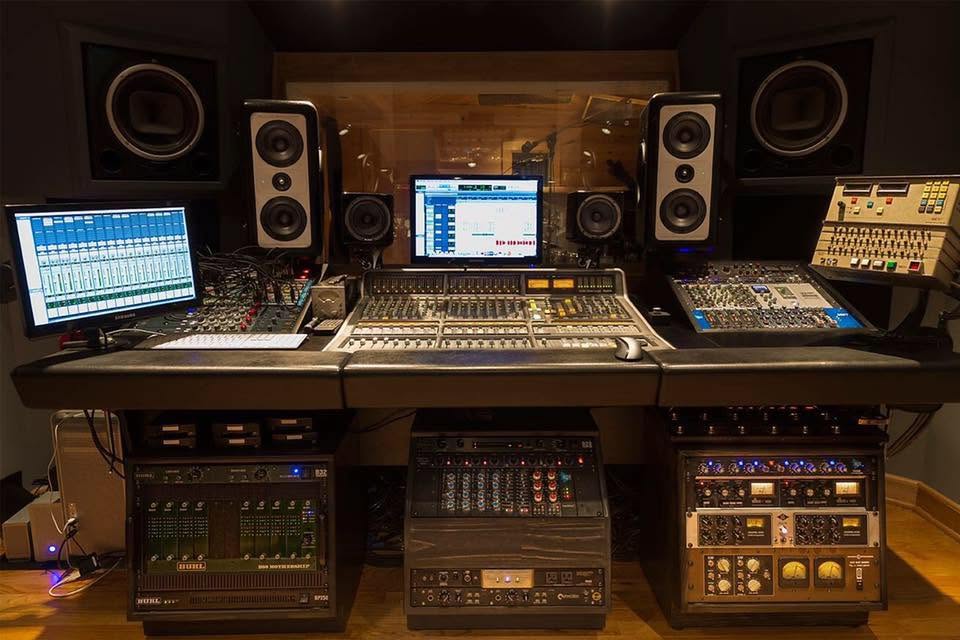
Around 2010 I started a recording studio. At first it was a side thing, a place to keep working while the band sorted itself out. What I didn’t expect was how much I would like producing other people’s music. The focus shifted. The hours in the studio started to feel more natural than the hours in the van. That became the full-time path.
What Almost Making It Taught Me
Looking back at 2005 to 2012, the clearest lesson is about perseverance and what it actually costs. Almost making it is its own education. You learn how long you can live on the idea that the next show will change everything. You learn what you’re willing to give up and what you eventually refuse to give up. You learn that poor management can erase years of work faster than talent can replace it.
You also learn that the skills you pick up while you’re failing—writing, recording, figuring out how a room works—don’t disappear when the band does. The Auto-Tuned vocals and the imperfect album are still part of the record. So are the saltines, the near-misses, and the decision to keep going in a different room.
The road didn’t take me where I thought it would. It took me to a studio, to a daughter, and to a clearer sense of what I was actually built to do. That turned out to be enough.
And yes — I’m gatekeeping my smooth jazz record. It’s out in the world as Elevator to Nowhere, it’s not on the country playlist, and I’d rather you find it on purpose.
Comments (0)
Be the first to share your thoughts.
Related stories